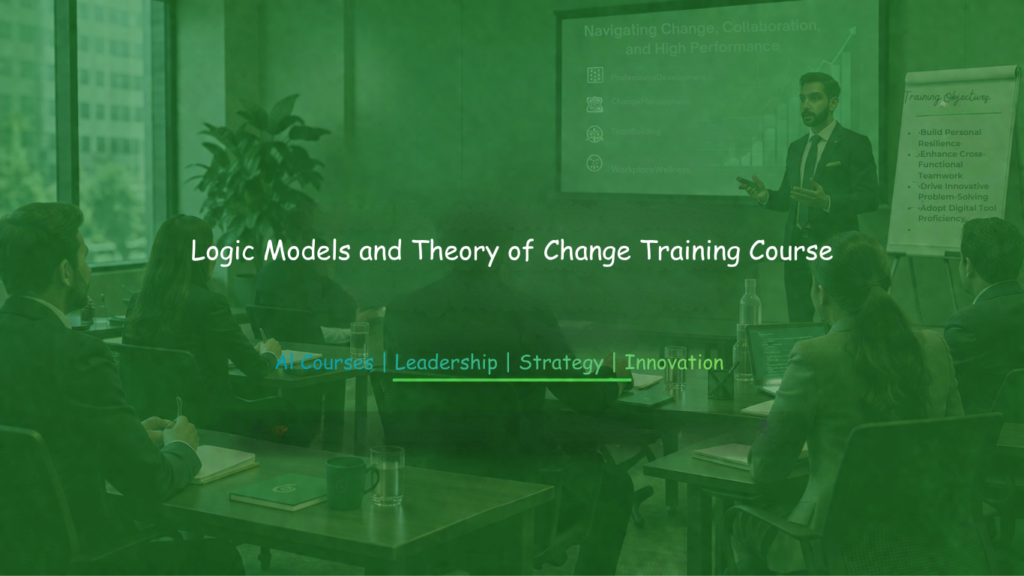
How can organizations demonstrate measurable impact while meeting increasing accountability and evidence-based management requirements? Logic Models and Theory of Change Training equips professionals with practical tools to plan, measure, and communicate results effectively. The course explores results-based management, strategic planning, monitoring frameworks, outcome mapping, and impact measurement approaches that connect resources, activities, outputs, outcomes, and long-term impact. Participants learn how to strengthen performance measurement systems, improve stakeholder alignment, and support data-driven decision-making that enhances program effectiveness and transparency.
In today’s dynamic environment of funding pressures, regulatory requirements, digital transformation, and evolving stakeholder expectations, organizations need strong frameworks that link strategy, implementation, learning, and performance. This training provides practical guidance on developing results frameworks, performance indicators, outcome pathways, and evidence-generation systems. Through real-world applications, participants gain skills in impact assessment, adaptive management, risk-informed planning, and organizational performance improvement, enabling them to translate strategic goals into measurable outcomes and sustainable development results across diverse sectors.
Training Objectives
- Design comprehensive logic models that align strategic goals, outcomes, indicators, and performance measures.
- Analyze complex program environments to identify assumptions, risks, dependencies, and change pathways.
- Implement results-based management frameworks for effective planning, monitoring, and reporting.
- Evaluate program effectiveness using performance measurement tools and impact assessment methodologies.
- Apply outcome mapping, stakeholder analysis, and evidence-based decision-making frameworks.
- Integrate change frameworks into organizational planning, governance, and operational processes.
- Optimize program performance through adaptive management, continuous learning, and strategic evaluation.
Who Should Attend?
- Monitoring and Evaluation Specialists.
- Program and Project Managers.
- Development and Humanitarian Professionals.
- Strategic Planning and Performance Management Officers.
- Policy Analysts and Research Professionals.
- Governance, Audit, and Oversight Personnel.
- Senior Executives, Directors, and Decision-Makers.
Training Summary
This Logic Models and Theory of Change Training focuses on helping professionals design, develop, and apply logic models and theory of change frameworks that strengthen program effectiveness, accountability, and measurable impact. The course explores results-based management approaches, outcome pathway development, performance measurement systems, stakeholder engagement strategies, impact assessment methodologies, and evidence-based planning techniques. Participants will gain practical skills for linking interventions to outcomes, measuring results, improving program performance, and supporting strategic decision-making.
- Understand the principles and applications of logic models and theory of change frameworks.
- Learn practical approaches for designing outcome pathways and results frameworks.
- Strengthen performance measurement and impact assessment capabilities.
- Improve strategic planning and evidence-based decision-making skills.
- Develop strategies for enhancing accountability, learning, and program effectiveness.
Key Takeaways
- Comprehensive understanding of logic models and theory of change principles and methodologies.
- Enhanced ability to design results frameworks that align activities, outputs, outcomes, and impact.
- Improved competency in performance measurement, outcome mapping, and impact assessment.
- Practical techniques for integrating theory of change into planning, monitoring, and evaluation systems.
- Greater confidence in managing complex programs with measurable and sustainable results.
- Stronger capability to support strategic decisions through evidence-based frameworks and analysis.
- Improved approaches for strengthening accountability, organizational learning, and development effectiveness.
Course Outline
Day 1: Strategic Results Frameworks and Change Pathways
- Results-Based Management Principles and Strategic Alignment.
- Evolution of Program Design and Impact Planning Frameworks.
- Components of High-Performance Logic Models.
- Change Pathway Architecture and Outcome Relationships.
- Stakeholder Analysis and Value Chain Mapping.
- Assumptions, External Factors, and Risk Considerations.
- Strategic Integration of Results Frameworks.
Day 2: Designing Logic Models for Performance Excellence
- Inputs, Activities, Outputs, Outcomes, and Impact Structures.
- Developing Results Chains and Performance Pathways.
- Outcome Hierarchies and Contribution Analysis.
- Indicator Selection and Measurement Criteria.
- Performance Metrics and Data Quality Standards.
- Alignment of Program Objectives and Organizational Goals.
- Advanced Logic Model Design Methodologies.
Day 3: Developing Effective Theory of Change Frameworks
- Theory of Change Design Principles.
- Outcome Mapping and Pathway Development.
- Causal Linkages and Change Assumption Analysis.
- Evidence-Based Program Design Approaches.
- Systems Thinking for Complex Programs.
- Strategic Learning and Adaptive Management Concepts.
- Integration of Change Frameworks into Planning Systems.
Day 4: Monitoring, Evaluation, and Impact Measurement
- Monitoring Framework Design and Implementation.
- Performance Indicator Development Techniques.
- Data Collection and Validation Strategies.
- Impact Assessment Methodologies.
- Evaluation Frameworks and Evidence Generation.
- Performance Reporting and Results Communication.
- Continuous Improvement and Organizational Learning Systems.
Day 5: Organizational Integration and Strategic Implementation
- Embedding Results Frameworks into Governance Structures.
- Portfolio-Level Performance Management Approaches.
- Resource Allocation and Strategic Decision Support.
- Managing Risks, Assumptions, and Emerging Challenges.
- Digital Tools for Monitoring and Impact Tracking.
- Accountability, Transparency, and Stakeholder Engagement.
- Sustainable Impact Management and Future Readiness Strategies.
Training Methodology
This training course uses a practical and participant-centered learning approach that strengthens monitoring and evaluation competencies, analytical capabilities, and evidence-based decision-making skills. The methodology combines expert guidance, real-world applications, and industry-recognized frameworks to enhance professional effectiveness and organizational performance.
Methodology includes:
- Expert-led sessions facilitated by experienced monitoring and evaluation practitioners, industry specialists, and subject matter experts.
- Practical application of monitoring, evaluation, performance measurement, and results management frameworks.
- Real-world case studies drawn from development, government, nonprofit, humanitarian, and private sector programs.
- Tool-based demonstrations of monitoring systems, evaluation methodologies, performance dashboards, and impact measurement solutions.
- Interactive discussions and scenario-based learning focused on addressing complex organizational and project challenges.
Certification
Participants will receive a Certificate of Completion for completing the Logic Models and Theory of Change Training, issued by VISION REACH GLOBAL CONSULTANCY.
| Location | Duration | Fee | Language | |
|---|---|---|---|---|
| Online, Virtual | Mon - Fri (5 Days) | USD 800 | 80,000 KES | English | Book Next Session → |
| Nairobi, Kenya | Mon - Fri (5 Days) | USD 1500 |110,000 KES | English | Book Next Session → |
| Mombasa, Kenya | Mon - Fri (5 Days) | USD 1500 |115,000 KES | English | Book Next Session → |
| Kisumu, Kenya | Mon - Fri (5 Days) | USD 1500 |115,000 KES | English | Book Next Session → |
| Naivasha, Kenya | Mon - Fri (5 Days) | USD 1500 |110,000 KES | English | Book Next Session → |
| Cape Town, South Africa | Mon - Fri (5 Days) | USD 3,600 | English | Book Next Session → |
| Pretoria, South Africa | Mon - Fri (5 Days) | USD 3,200 | English | Book Next Session → |
| Johanessburg, South Africa | Mon - Fri (5 Days) | USD 3,400 | English | Book Next Session → |
| Zanzibar, Tanzania | Mon - Fri (5 Days) | USD 2,600 | English | Book Next Session → |
| Dar es Salaam, Tanzania | Mon - Fri (5 Days) | USD 2,000 | English | Book Next Session → |
| Arusha, Tanzania | Mon - Fri (5 Days) | USD 1,900 | English | Book Next Session → |
| Dodoma, Tanzania | Mon - Fri (5 Days) | USD 1,800 | English | Book Next Session → |
| Kigali, Rwanda | Mon - Fri (5 Days) | USD 1,900 | English | Book Next Session → |
| Kampala, Uganda | Mon - Fri (5 Days) | USD 1,900 | English | Book Next Session → |
| Dubai, UAE | Mon - Fri (5 Days) | USD 3,800 | English | Book Next Session → |
| Abuja, Nigeria | Mon - Fri (5 Days) | USD 2,800 | English | Book Next Session → |
| Lagos, Nigeria | Mon - Fri (5 Days) | USD 2,800 | English | Book Next Session → |
| Accra, Ghana | Mon - Fri (5 Days) | USD 5,500 | English | Book Next Session → |
| Machakos, Kenya | Mon - Fri (5 Days) | USD 1500 |115,000 KES | English | Book Next Session → |