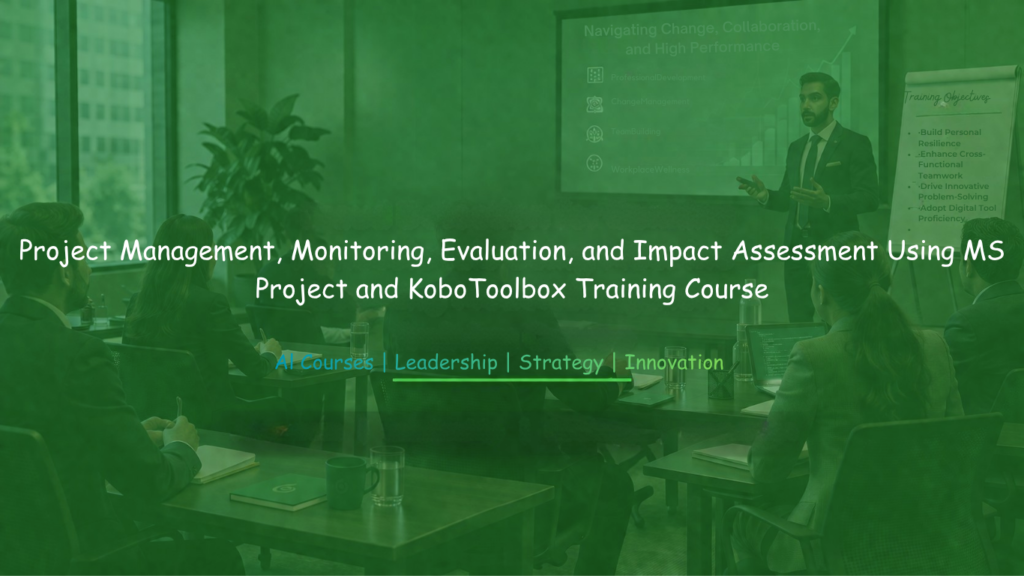
Project Management, Monitoring, Evaluation, and Impact Assessment Using MS Project and KoboToolbox Training provides participants with practical skills for planning, implementing, monitoring, evaluating, and assessing the impact of development and organizational projects. Successful projects require strong management systems, effective monitoring frameworks, reliable data collection methods, and evidence-based evaluation approaches to ensure that intended objectives and results are achieved. This comprehensive training combines project management principles with modern digital tools that support project planning, performance tracking, data collection, analysis, reporting, and impact measurement. Participants will learn how to use MS Project for project scheduling, resource management, progress tracking, and reporting while applying KoboToolbox for mobile data collection, survey design, and field monitoring activities.
Furthermore, the course emphasizes practical application through hands-on exercises, real-world case studies, and project simulations. Participants will strengthen their ability to manage projects efficiently, develop monitoring and evaluation systems, conduct impact assessments, generate meaningful reports, and support informed decision-making through reliable project data and analytical insights.
Training Objectives
- Strengthen understanding of project management principles and methodologies.
- Enhance the ability to plan, schedule, and manage projects using MS Project.
- Develop practical skills for designing, monitoring, and evaluating frameworks.
- Improve competency in mobile data collection using KoboToolbox.
- Build capability in project performance tracking and reporting.
- Strengthen skills in data analysis for monitoring and evaluation activities.
- Equip participants with techniques for conducting project evaluations and impact assessments.
- Improve knowledge of results-based management approaches.
- Strengthen evidence-based decision-making capabilities.
- Enable participants to manage project information effectively throughout the project lifecycle.
Who Should Attend?
- Project Managers
- Monitoring and Evaluation Officers
- Program Managers
- Development Practitioners
- NGO and CSO Staff
- Research Officers
- Data Analysts
- Government Project Coordinators
- Project Planning Officers
- Consultants involved in project implementation and evaluation
- Development Program Officers
- Results-Based Management Professionals
Training Summary
This practical and interactive training focuses on strengthening participants’ ability to manage projects, monitor performance, evaluate outcomes, and assess impacts using MS Project and KoboToolbox. The course combines project planning, scheduling, monitoring systems design, digital data collection, analysis, reporting, and impact evaluation methodologies. Participants will gain hands-on experience through practical exercises and project-based assignments.
- Understand project management and monitoring principles.
- Learn practical project scheduling and tracking using MS Project.
- Strengthen digital data collection capabilities using KoboToolbox.
- Improve monitoring, evaluation, and reporting competencies.
- Develop impact assessment and evidence-based decision-making skills.
Key Takeaways
- Comprehensive understanding of project lifecycle management.
- Enhanced ability to create and manage project schedules using MS Project.
- Improved competency in designing, monitoring, and evaluating frameworks.
- Practical skills in mobile data collection using KoboToolbox.
- Stronger capability in project performance tracking and reporting.
- Enhanced knowledge of project evaluation and impact assessment techniques.
- Greater confidence in managing data-driven development projects.
Course Outline
Day 1: Project Planning and Management Concepts
- Understanding project management principles and processes.
- Defining project goals, objectives, and deliverables.
- Identifying project stakeholders and expectations.
- Understanding project lifecycle phases.
- Establishing project governance structures.
- Developing project scope statements.
- Aligning projects with organizational strategies.
Day 2: Project Design and Results Framework Development
- Developing project logic models.
- Designing results chains and theories of change.
- Establishing project outcomes and outputs.
- Defining performance indicators.
- Identifying assumptions and risks.
- Creating results frameworks.
- Strengthening project accountability systems.
Day 3: MS Project Interface and Project Setup
- Navigating the MS Project environment.
- Creating new projects and calendars.
- Defining project activities and milestones.
- Structuring work breakdown schedules.
- Organizing project tasks efficiently.
- Establishing project timelines.
- Configuring project settings and templates.
Day 4: Project Scheduling and Resource Management
- Creating task dependencies and relationships.
- Assigning resources to project activities.
- Managing project workloads and capacities.
- Developing realistic project schedules.
- Monitoring critical paths and milestones.
- Balancing resource utilization.
- Optimizing project timelines.
Day 5: Project Tracking and Performance Monitoring
- Updating project progress information.
- Monitoring schedule performance.
- Tracking project costs and resources.
- Managing project variances.
- Generating project status reports.
- Evaluating project performance indicators.
- Supporting project decision-making.
Day 6: Monitoring and Evaluation Systems Design
- Developing monitoring plans and frameworks.
- Selecting indicators for project tracking.
- Establishing baseline information requirements.
- Designing data collection schedules.
- Creating reporting systems and processes.
- Managing monitoring workflows.
- Strengthening accountability mechanisms.
Day 7: Introduction to KoboToolbox for Data Collection
- Understanding KoboToolbox functionalities.
- Creating KoboToolbox accounts and projects.
- Designing digital questionnaires.
- Configuring form settings and validation rules.
- Managing user roles and permissions.
- Preparing forms for field deployment.
- Understanding data collection workflows.
Day 8: Advanced KoboToolbox Form Development
- Applying skip logic and branching techniques.
- Using calculations and automated fields.
- Integrating multimedia and GPS data.
- Designing complex survey instruments.
- Improving form usability and efficiency.
- Managing offline data collection.
- Testing and validating survey tools.
Day 9: Field Data Collection and Quality Assurance
- Deploying digital forms in field settings.
- Managing enumerator activities.
- Conducting field monitoring exercises.
- Implementing data quality controls.
- Reviewing submitted records.
- Addressing common data collection challenges.
- Strengthening field supervision practices.
Day 10: Data Management and Cleaning
- Exporting KoboToolbox datasets.
- Organizing collected project data.
- Identifying and correcting data errors.
- Managing missing and inconsistent records.
- Preparing datasets for analysis.
- Ensuring data integrity and reliability.
- Establishing data management procedures.
Day 11: Monitoring Data Analysis and Reporting
- Analyzing project monitoring data.
- Measuring indicator performance.
- Creating performance dashboards.
- Developing monitoring reports.
- Interpreting project progress findings.
- Presenting monitoring results effectively.
- Supporting adaptive project management.
Day 12: Project Evaluation Approaches and Methods
- Understanding evaluation purposes and types.
- Planning project evaluations effectively.
- Developing evaluation questions.
- Selecting evaluation methodologies.
- Designing evaluation data collection tools.
- Managing evaluation activities.
- Ensuring evaluation quality standards.
Day 13: Impact Assessment Techniques
- Understanding impact assessment concepts.
- Measuring project outcomes and impacts.
- Applying quantitative assessment methods.
- Applying qualitative assessment approaches.
- Conducting outcome harvesting exercises.
- Assessing sustainability and long-term effects.
- Managing attribution and contribution challenges.
Day 14: Evaluation Data Analysis and Findings Presentation
- Organizing evaluation datasets.
- Analyzing quantitative and qualitative findings.
- Interpreting project impact results.
- Developing evidence-based conclusions.
- Creating evaluation reports.
- Presenting findings to stakeholders.
- Formulating actionable recommendations.
Day 15: Integrated Project Management and M&E Practicum
- Developing complete project management plans.
- Creating monitoring and evaluation frameworks.
- Building KoboToolbox data collection systems.
- Managing project schedules using MS Project.
- Conducting project performance reviews.
- Presenting integrated project and M&E solutions.
- Developing action plans for workplace implementation.
Training Methodology
This training course uses a practical and software-focused learning approach that strengthens project management, monitoring, evaluation, and impact assessment capabilities through hands-on application.
Methodology includes:
- Guided demonstrations of MS Project and KoboToolbox workflows.
- Hands-on project planning and scheduling exercises.
- Practical mobile data collection assignments.
- Real-world project monitoring and evaluation case studies.
- Interactive workshops on results-based management.
- Scenario-based exercises on impact assessment and reporting.
- Group projects focused on integrated project management solutions.
Certification
Upon successful completion of the training, participants will receive a Certificate of Completion in Project Management, Monitoring, Evaluation, and Impact Assessment Using MS Project and KoboToolbox Training issued by Vision Reach Global Consultancy.
| Location | Duration | Fee | Language | |
|---|---|---|---|---|
| Online, Virtual | Mon - Fri (15 Days) | USD 2,400 | 240,000 KES | English | Book Next Session → |
| Nairobi, Kenya | Mon - Fri (15 Days) | USD 4,200 | 300,000 KES | English | Book Next Session → |
| Mombasa, Kenya | Mon - Fri (15 Days) | USD 4,200 | 320,000 KES | English | Book Next Session → |
| Kisumu, Kenya | Mon - Fri (15 Days) | USD 4,200 | 320,000 KES | English | Book Next Session → |
| Naivasha, Kenya | Mon - Fri (15 Days) | USD 4,200 | 300,000 KES | English | Book Next Session → |
| Cape Town, South Africa | Mon - Fri (15 Days) | USD 9,000 | English | Book Next Session → |
| Pretoria, South Africa | Mon - Fri (15 Days) | USD 8,400 | English | Book Next Session → |
| Johanessburg, South Africa | Mon - Fri (15 Days) | USD 8,600 | English | Book Next Session → |
| Zanzibar, Tanzania | Mon - Fri (15 Days) | USD 7,000 | English | Book Next Session → |
| Dar es Salaam, Tanzania | Mon - Fri (15 Days) | USD 6,000 | English | Book Next Session → |
| Arusha, Tanzania | Mon - Fri (15 Days) | USD 5,500 | English | Book Next Session → |
| Dodoma, Tanzania | Mon - Fri (15 Days) | USD 5,200 | English | Book Next Session → |
| Kigali, Rwanda | Mon - Fri (15 Days) | USD 5,500 | English | Book Next Session → |
| Kampala, Uganda | Mon - Fri (15 Days) | USD 5,500 | English | Book Next Session → |
| Dubai, UAE | Mon - Fri (15 Days) | USD 9,000 | English | Book Next Session → |
| Abuja, Nigeria | Mon - Fri (15 Days) | USD 7,000 | English | Book Next Session → |
| Lagos, Nigeria | Mon - Fri (15 Days) | USD 7,000 | English | Book Next Session → |
| Accra, Ghana | Mon - Fri (15 Days) | USD 7,000 | English | Book Next Session → |
| Machakos, Kenya | Mon - Fri (15 Days) | USD 4,200 | 320,000 KES | English | Book Next Session → |