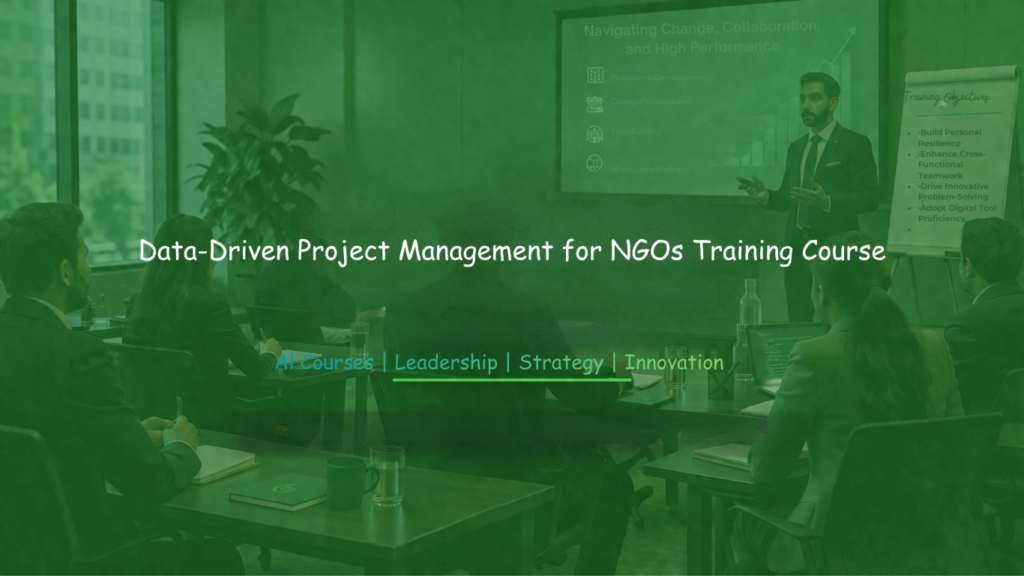
Successful NGO projects depend on accurate information, timely reporting, and informed decision-making to achieve meaningful community impact. Data-Driven Project Management for NGOs Training equips professionals with practical skills for collecting, managing, analyzing, and using project data to improve planning and implementation processes. Throughout this course, participants learn how to track project activities, measure performance, manage resources, and make evidence-based decisions that strengthen accountability and project success. In addition, the training improves participants’ ability to use data for monitoring progress, solving problems, and supporting effective communication with donors and stakeholders.
Furthermore, this training responds to the increasing need for NGO professionals who can manage projects using reliable information and modern data tools. Participants explore practical methods for data collection, reporting, visualization, and project tracking that improve operational efficiency and programme performance. Through practical exercises, group discussions, case studies, and hands-on activities, learners strengthen analytical skills, improve project coordination practices, and develop strategies that support better project outcomes and sustainable community impact.
Training Objectives
Upon completion of this training course, participants will be able to:
- Apply data-driven approaches in NGO project management
- Collect and manage project data effectively
- Analyze project information for informed decision-making
- Improve project monitoring and reporting practices
- Use data tools to track project performance
- Strengthen accountability and transparency within projects
- Support evidence-based planning and programme improvement
Who Should Attend?
This training course is ideal for:
- NGO Project Managers and Coordinators
- Monitoring and Evaluation Officers
- Programme Officers and Field Staff
- Data Management and Reporting Professionals
- Development and Humanitarian Workers
- Government and Community Project Officers
- Professionals involved in NGO project implementation
Training Summary
This training course strengthens practical skills in managing NGO projects using accurate data and evidence-based approaches. It helps participants improve project planning, monitoring, reporting, and decision-making processes. Through this course, participants will:
- Improve data-driven project management capability
- Strengthen project monitoring and reporting systems
- Enhance data analysis and interpretation skills
- Build effective project tracking frameworks
- Develop evidence-based project improvement strategies
Key Takeaways
- Better understanding of data-driven project management
- Improved ability to analyze project information
- Stronger reporting and accountability practices
- Enhanced confidence in using project data tools
- Greater ability to support effective NGO project delivery
Course Outline
Day 1: Understanding Data in NGO Projects
- Introduction to data-driven project management
- Understanding the value of project data
- Types of data used in NGO programmes
- Linking project activities with measurable results
- Roles and responsibilities in data management
- Building simple project information systems
- Strengthening accountability through reliable data
Day 2: Planning Projects with Better Information
- Conducting project needs assessments
- Setting project goals and measurable targets
- Developing project work plans and schedules
- Creating practical performance indicators
- Designing simple project tracking tools
- Aligning project activities with expected outcomes
- Improving planning through evidence-based approaches
Day 3: Collecting Quality Project Data
- Introduction to data collection methods
- Designing surveys and field data tools
- Conducting interviews and focus group discussions
- Managing quantitative and qualitative information
- Ensuring data quality and accuracy
- Ethical practices in data collection activities
- Organizing and storing project information safely
Day 4: Turning Data into Useful Insights
- Introduction to basic data analysis methods
- Interpreting project findings and trends
- Using charts and tables for data presentation
- Measuring project outputs and outcomes
- Identifying gaps and performance challenges
- Supporting decisions with project evidence
- Improving project performance through analysis
Day 5: Monitoring Progress with Confidence
- Building practical monitoring systems
- Tracking project activities and milestones
- Monitoring budgets and project resources
- Measuring project progress and achievements
- Managing project risks using data
- Conducting regular project reviews
- Improving project follow-up practices
Day 6: Writing Reports that Communicate Results
- Preparing project progress reports
- Writing clear data-based project summaries
- Presenting findings to donors and stakeholders
- Developing simple reporting templates
- Improving report accuracy and clarity
- Using visuals and dashboards in reports
- Managing reporting timelines and schedules
Day 7: Digital Tools for NGO Project Management
- Introduction to digital project management tools
- Using spreadsheets for project tracking
- Mobile applications for field data collection
- Creating project dashboards and trackers
- Managing online reporting platforms
- Improving teamwork through digital collaboration
- Protecting project information and data security
Day 8: Managing Teams and Stakeholder Communication
- Improving communication within project teams
- Sharing project information effectively
- Managing stakeholder expectations professionally
- Conducting project meetings and briefings
- Strengthening teamwork through data sharing
- Handling communication challenges during projects
- Building trust through transparent reporting
Day 9: Learning and Improving through Project Data
- Using lessons learned for project improvement
- Supporting organizational learning and growth
- Measuring community impact and project success
- Strengthening accountability and transparency practices
- Encouraging evidence-based decision-making
- Improving programme effectiveness through feedback
- Building continuous improvement systems
Day 10: Future Trends in Data-Driven NGO Projects
- Modern trends in NGO project management
- Real-time project monitoring systems
- Data visualization and storytelling techniques
- Innovation in project reporting and tracking
- Artificial intelligence in project management
- Remote collaboration and online project systems
- Future developments in NGO data management practices
Training Methodology
This training course uses a practical and interactive learning approach that strengthens data-driven project management knowledge and skills.
Methodology includes:
- Guided presentations on project data management concepts
- Hands-on exercises for data collection and analysis
- Real-life NGO project case studies and scenarios
- Group discussions and collaborative learning sessions
- Practical workshops for reporting and monitoring activities
- Scenario-based assignments for project tracking exercises
- Team activities that improve communication and coordination skills
Certification
Upon successful completion, participants will receive a Certificate of Completion in Data-Driven Project Management for NGOs Training issued by Vision Reach Global Consultancy.
| Location | Duration | Fee | Language | |
|---|---|---|---|---|
| Online, Virtual | Mon - Fri (10 Days) | USD 1,700 | 160,000 KES | English | Book Next Session → |
| Nairobi, Kenya | Mon - Fri (10 Days) | USD 3,000 | 220,000 KES | English | Book Next Session → |
| Mombasa, Kenya | Mon - Fri (10 Days) | USD 3,000 | 230,000 KES | English | Book Next Session → |
| Kisumu, Kenya | Mon - Fri (10 Days) | USD 3,000 | 230,000 KES | English | Book Next Session → |
| Naivasha, Kenya | Mon - Fri (10 Days) | USD 3,000 | 220,000 KES | English | Book Next Session → |
| Cape Town, South Africa | Mon - Fri (10 Days) | USD 7,200 | English | Book Next Session → |
| Pretoria, South Africa | Mon - Fri (10 Days) | USD 6,400 | English | Book Next Session → |
| Johanessburg, South Africa | Mon - Fri (10 Days) | USD 6,800 | English | Book Next Session → |
| Zanzibar, Tanzania | Mon - Fri (10 Days) | USD 5,200 | English | Book Next Session → |
| Dar es Salaam, Tanzania | Mon - Fri (10 Days) | USD 4,000 | English | Book Next Session → |
| Arusha, Tanzania | Mon - Fri (10 Days) | USD 3,800 | English | Book Next Session → |
| Dodoma, Tanzania | Mon - Fri (10 Days) | USD 3,600 | English | Book Next Session → |
| Kigali, Rwanda | Mon - Fri (10 Days) | USD 3,800 | English | Book Next Session → |
| Kampala, Uganda | Mon - Fri (10 Days) | USD 3,800 | English | Book Next Session → |
| Dubai, UAE | Mon - Fri (10 Days) | USD 7,600 | English | Book Next Session → |
| Abuja, Nigeria | Mon - Fri (10 Days) | USD 5,600 | English | Book Next Session → |
| Lagos, Nigeria | Mon - Fri (10 Days) | USD 5,600 | English | Book Next Session → |
| Accra, Ghana | Mon - Fri (10 Days) | USD 7,600 | English | Book Next Session → |