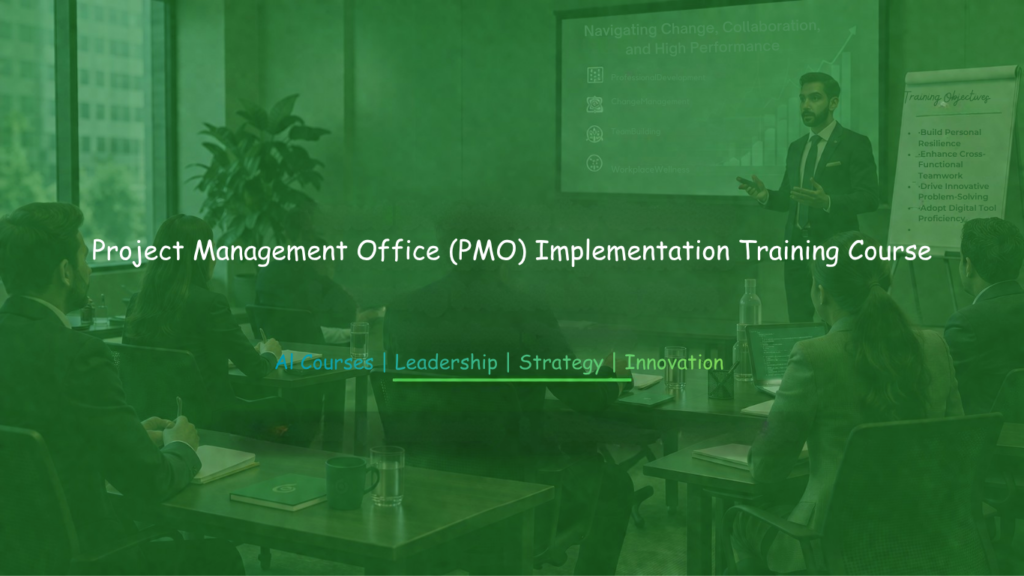
Clear project coordination, consistent reporting, and proper governance help teams manage projects more efficiently and achieve better business results. This Project Management Office (PMO) Implementation Training equips professionals with practical skills for setting up, managing, and improving Project Management Offices that support project success across different sectors. Throughout this course, participants learn how to develop PMO structures, standardize project processes, monitor performance, manage portfolios, and improve communication between teams and stakeholders. In addition, the training strengthens leadership, planning, and decision-making abilities that support effective project oversight and organizational growth.
Participants will also explore practical PMO models, governance methods, reporting systems, and project control techniques that strengthen project coordination and resource management. Through case studies, practical workshops, group discussions, and hands-on activities, learners shall improve their PMO implementation skills, strengthen project governance practices, and develop strategies that support long-term project and organizational success.
Training Objectives
Upon completion of this training course, participants will be able to:
- Apply practical PMO implementation techniques effectively
- Develop structured PMO systems and workflows
- Standardize project management processes professionally
- Monitor project performance and governance practices
- Improve project reporting and stakeholder communication
- Manage project portfolios and resource coordination efficiently
- Strengthen organizational project oversight and accountability
Who Should Attend?
This training course is ideal for:
- Project Managers and Coordinators
- PMO Managers and PMO Staff
- Programme Managers and Supervisors
- Operations and Planning Professionals
- NGO and Development Practitioners
- Government and Public Sector Professionals
- Professionals involved in project governance and coordination
Training Summary
This training course strengthens practical PMO implementation and project governance skills for improving project coordination and organizational performance. It helps participants improve reporting, standardization, monitoring, and decision-making processes within project environments. Through this course, participants will:
- Improve PMO implementation capability
- Strengthen project governance and oversight skills
- Enhance reporting and portfolio management practices
- Build structured systems for project coordination
- Develop practical approaches for improving project performance
Key Takeaways
- Better understanding of PMO implementation practices
- Improved ability to standardize project workflows
- Stronger project monitoring and reporting capability
- Enhanced confidence in managing PMO operations
- Greater ability to support project governance and accountability
Course Outline
Day 1: Structuring PMO Roles and Project Oversight
- Defining PMO roles and responsibilities clearly
- Setting project governance and reporting structures
- Aligning PMO activities with business objectives
- Managing communication between project teams
- Creating project oversight and coordination systems
- Improving accountability across project environments
- Strengthening leadership within PMO operations
Day 2: Standardizing Project Processes and Workflows
- Developing standardized project management procedures
- Managing project templates and documentation systems
- Improving project planning and scheduling practices
- Coordinating project workflows across departments
- Creating reporting and approval processes
- Managing project compliance and quality standards
- Strengthening consistency in project delivery
Day 3: Monitoring Performance and Managing Portfolios
- Tracking project progress and performance indicators
- Managing project portfolios and priorities effectively
- Measuring project outcomes and operational efficiency
- Allocating resources across multiple projects
- Managing project risks and reporting issues
- Improving decision-making through project data
- Strengthening portfolio monitoring and control practices
Day 4: Managing Stakeholders and Project Communication
- Improving communication within PMO environments
- Managing stakeholder expectations professionally
- Preparing project performance reports and updates
- Conducting project review meetings effectively
- Handling project conflicts and coordination challenges
- Strengthening teamwork and collaboration practices
- Building trust through transparent project reporting
Day 5: Improving PMO Performance and Long-Term Success
- Evaluating PMO effectiveness and project outcomes
- Managing continuous improvement within PMO operations
- Using digital tools for PMO reporting and coordination
- Supporting organizational learning and knowledge sharing
- Applying PMO implementation case studies practically
- Developing action plans for PMO improvement
- Strengthening sustainability in project governance practices
Training Methodology
This training course uses a practical and interactive learning approach that strengthens PMO implementation and project governance skills.
Methodology includes:
- Guided presentations on PMO systems and governance practices
- Hands-on exercises for project coordination and reporting activities
- Real-life PMO case studies and implementation scenarios
- Group discussions and collaborative learning sessions
- Practical workshops for portfolio and workflow management
- Scenario-based assignments for solving PMO challenges
- Team exercises that improve communication and leadership skills
Certification
Upon successful completion, participants will receive a Certificate of Completion in Project Management Office (PMO) Implementation Training issued by Vision Reach Global Consultancy.
| Location | Duration | Fee | Language | |
|---|---|---|---|---|
| Online, Virtual | Mon - Fri (5 Days) | USD 800 | 80,000 KES | English | Book Next Session → |
| Nairobi, Kenya | Mon - Fri (5 Days) | USD 1500 |110,000 KES | English | Book Next Session → |
| Mombasa, Kenya | Mon - Fri (5 Days) | USD 1500 |115,000 KES | English | Book Next Session → |
| Kisumu, Kenya | Mon - Fri (5 Days) | USD 1500 |115,000 KES | English | Book Next Session → |
| Naivasha, Kenya | Mon - Fri (5 Days) | USD 1500 |110,000 KES | English | Book Next Session → |
| Cape Town, South Africa | Mon - Fri (5 Days) | USD 3,600 | English | Book Next Session → |
| Pretoria, South Africa | Mon - Fri (5 Days) | USD 3,200 | English | Book Next Session → |
| Johanessburg, South Africa | Mon - Fri (5 Days) | USD 3,400 | English | Book Next Session → |
| Zanzibar, Tanzania | Mon - Fri (5 Days) | USD 2,600 | English | Book Next Session → |
| Dar es Salaam, Tanzania | Mon - Fri (5 Days) | USD 2,000 | English | Book Next Session → |
| Arusha, Tanzania | Mon - Fri (5 Days) | USD 1,900 | English | Book Next Session → |
| Dodoma, Tanzania | Mon - Fri (5 Days) | USD 1,800 | English | Book Next Session → |
| Kigali, Rwanda | Mon - Fri (5 Days) | USD 1,900 | English | Book Next Session → |
| Kampala, Uganda | Mon - Fri (5 Days) | USD 1,900 | English | Book Next Session → |
| Dubai, UAE | Mon - Fri (5 Days) | USD 3,800 | English | Book Next Session → |
| Abuja, Nigeria | Mon - Fri (5 Days) | USD 2,800 | English | Book Next Session → |
| Lagos, Nigeria | Mon - Fri (5 Days) | USD 2,800 | English | Book Next Session → |
| Accra, Ghana | Mon - Fri (5 Days) | USD 5,500 | English | Book Next Session → |