
Mandatory ESG reporting is rapidly moving from a voluntary exercise to a regulatory obligation, forcing organizations to rethink their corporate sustainability disclosure strategies across all markets. Companies must now align with mandatory ESG reporting requirements shaped by regulators and investor demand for consistent, decision-useful sustainability data.
At the same time, growing stakeholder scrutiny compels businesses to adopt transparent ESG compliance frameworks supported by accurate, verifiable, and audit-ready data systems. Consequently, organizations that delay adaptation expose themselves to regulatory penalties, reputational damage, and weakening investor trust in an increasingly accountability-driven environment.
What’s Changing in ESG Reporting
Global Standards Are Becoming Mandatory
First, regulatory frameworks such as the Corporate Sustainability Reporting Directive (CSRD) and the International Sustainability Standards Board (ISSB) are significantly reshaping reporting obligations. These frameworks require companies to disclose consistent, comparable, and decision-useful sustainability information aligned with global expectations.
Additionally, organizations must now align their disclosures with global ESG reporting standards to ensure transparency and accountability across environmental, social, and governance dimensions. This shift signals a move toward standardized reporting that reduces ambiguity, while increasing comparability between companies across industries.
Increased Audit and Assurance Requirements
Furthermore, ESG disclosures increasingly require third-party verification to ensure the credibility and reliability of reported sustainability metrics and performance indicators. Independent assurance providers now evaluate ESG data accuracy and verification systems, strengthening confidence among investors and regulatory authorities.
Consequently, companies must invest in robust internal processes that support audit readiness while minimizing risks associated with inaccurate or misleading sustainability disclosures.
The Real Cost of Greenwashing
Legal and Financial Consequences
Greenwashing carries significant legal risks as regulators impose stricter penalties for misleading or exaggerated sustainability claims in corporate disclosures and communications. Authorities increasingly enforce greenwashing penalties and regulatory fines, targeting organizations that fail to substantiate their ESG claims with credible data.
Moreover, investors are becoming more vigilant, withdrawing capital from companies that demonstrate inconsistencies between reported ESG commitments and actual operational practices. This shift underscores the importance of maintaining transparent ESG disclosure practices supported by verifiable evidence and clear methodologies.
Brand Damage and Loss of Trust
In addition, reputational damage caused by greenwashing can have long-term consequences that extend beyond immediate financial penalties and regulatory scrutiny. Customers, partners, and stakeholders increasingly prioritize ethical and sustainable businesses, making trust a critical asset in today’s marketplace.
Therefore, organizations must focus on building authentic sustainability narratives backed by credible ESG reporting systems that reinforce stakeholder confidence and strengthen brand reputation over time.
Key Components of Compliant ESG Reporting
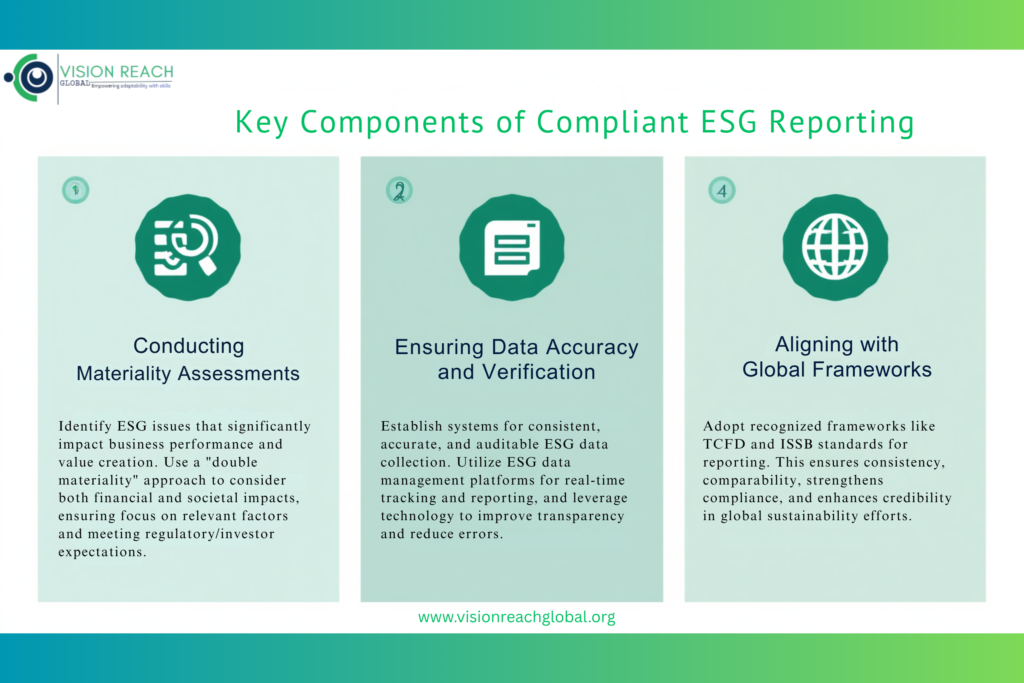
Conducting Materiality Assessments
A critical starting point involves identifying material ESG issues that significantly impact business performance, stakeholder expectations, and long-term value creation strategies. Companies should implement double materiality assessments to evaluate both financial risks and broader societal impacts associated with their operations.
This approach ensures that reporting focuses on the most relevant sustainability factors while aligning with regulatory expectations and investor priorities across different markets.
Ensuring Data Accuracy and Verification
Equally important, organizations must establish systems that ensure consistent, accurate, and auditable ESG data collection across all business units and operational processes. Implementing ESG data management platforms enables real-time tracking, validation, and reporting of sustainability metrics aligned with compliance requirements.
Furthermore, integrating technology-driven solutions enhances transparency while reducing manual errors that could compromise reporting credibility and regulatory compliance outcomes.
Aligning with Global Frameworks
Finally, companies should align their reporting with recognized frameworks such as the Task Force on Climate-related Financial Disclosures and the ISSB standards to ensure consistency and comparability across disclosures.
Alignment with these frameworks strengthens ESG regulatory compliance strategies while positioning organizations as credible and responsible participants in global sustainability efforts.
How Boards Should Oversee ESG
Strengthening Governance Structures
Boards play a crucial role in overseeing ESG performance by establishing dedicated committees responsible for sustainability governance and compliance oversight activities. These committees ensure accountability while integrating ESG considerations into overall corporate governance structures and decision-making processes.
Moreover, organizations should define clear roles and responsibilities to support effective ESG governance frameworks that align with regulatory expectations and stakeholder demands.
Linking ESG to Strategy and Risk
Additionally, boards must integrate ESG metrics into corporate strategy and enterprise risk management frameworks to ensure alignment with long-term business objectives. This integration enables organizations to identify emerging risks while leveraging sustainability opportunities that drive competitive advantage.
Consequently, linking ESG performance to executive incentives reinforces accountability while promoting a culture of responsible and sustainable business practices.
Quick Compliance Checklist
Conduct a Gap Analysis
Begin by assessing current reporting practices against applicable regulatory requirements to identify gaps in compliance and areas requiring immediate improvement. A thorough ESG compliance gap analysis provides a clear roadmap for aligning existing processes with evolving standards.
Strengthen Internal Controls
Next, implement robust internal controls that ensure data integrity, consistency, and traceability across all ESG reporting activities and operational workflows. These controls support reliable ESG reporting processes while minimizing risks associated with inaccurate disclosures and regulatory violations.
Prepare for External Assurance
Finally, organizations should prepare for third-party audits by documenting methodologies, assumptions, and data sources used in ESG reporting and disclosures. Readiness for external ESG assurance services enhances credibility while demonstrating commitment to transparency and accountability.
Conclusion
In a nutshell, Mandatory ESG Reporting Is Here: How to Stay Compliant and Avoid Greenwashing Penalties highlights a fundamental shift in how organizations approach sustainability and corporate accountability today. Compliance is no longer optional but a strategic differentiator that enhances credibility, attracts investment, and strengthens long-term resilience.
Therefore, businesses must proactively invest in ESG reporting compliance solutions and governance frameworks that ensure readiness for evolving regulatory requirements and stakeholder expectations. Explore ESG training programs or compliance support services today to strengthen your organization’s reporting capabilities and competitive positioning.