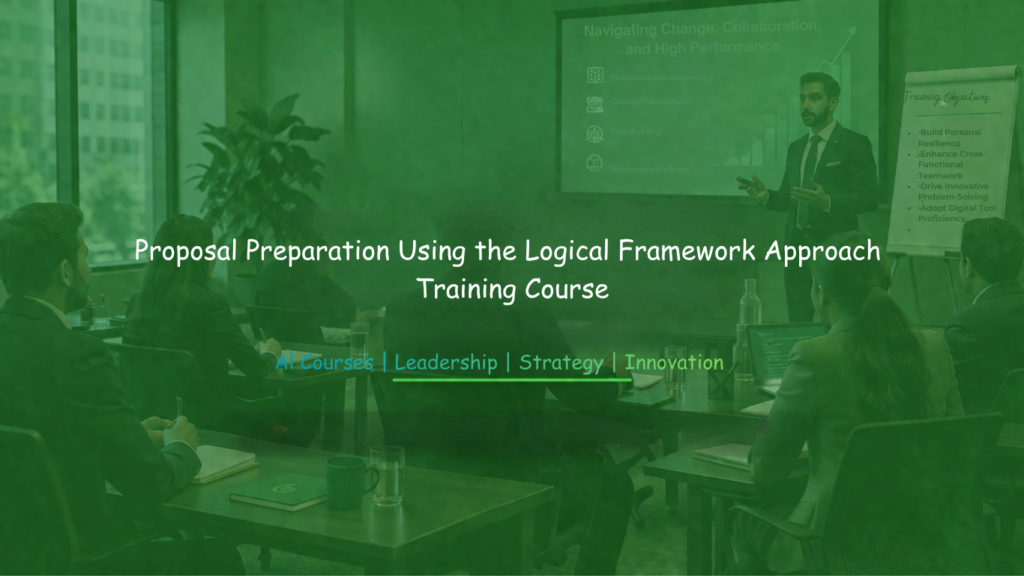
Proposal Preparation Using the Logical Framework Approach Training equips professionals with a structured, results-oriented methodology for designing, analyzing, and managing development projects and funding proposals. In today’s competitive funding environment, where clarity, accountability, and measurable impact are critical, this course helps ensure your proposal development practices align with donor expectations and results-based frameworks. It strengthens your ability to design coherent project logic, align objectives with measurable indicators, and develop compelling, fundable proposals using the Logical Framework Approach (LFA).
The program will introduce a systematic framework that integrates problem analysis, stakeholder mapping, objective setting, and results-based planning into a cohesive proposal structure. It will enhance your ability to link inputs, activities, outputs, outcomes, and impact while maintaining consistency and feasibility across the project cycle. Through practical exercises, real-world examples, and guided facilitation, you will refine skills in developing donor-ready proposals. Ultimately, the course builds a disciplined, evidence-based approach that improves proposal quality, funding success, and project effectiveness.
Training Objectives
- Understand the principles and structure of the Logical Framework Approach (LFA)
- Conduct comprehensive problem analysis and stakeholder mapping
- Develop clear project goals, outcomes, outputs, and activities
- Construct logical frameworks (logframes) for project design
- Define SMART indicators, assumptions, and means of verification
- Align project proposals with donor requirements and strategic priorities
- Strengthen results-based planning and monitoring frameworks
- Enhance proposal writing skills for competitive funding environments
Who Should Attend?
- Project managers and program officers
- Monitoring and evaluation (M&E) professionals
- NGO and development practitioners
- Grant writers and fundraising professionals
- Government officers involved in project planning
- Consultants in development and policy planning
- Research and implementation teams in donor-funded projects
Training Summary
This structured program builds practical competence in designing and managing projects using the Logical Framework Approach. It enables participants to move beyond descriptive proposals toward structured, results-based planning that clearly demonstrates impact, feasibility, and accountability. Through Proposal Preparation Using the Logical Framework Approach Training, participants gain the ability to systematically translate development ideas into well-structured, fundable project proposals.
- Strengthen capacity in results-based project design and planning
- Improve clarity and logical consistency in proposal development
- Enhance alignment with donor funding frameworks and priorities
- Build strong monitoring and evaluation foundations within proposals
- Increase success rates in competitive grant applications
Key Takeaways
- Practical mastery of the Logical Framework Approach (LFA)
- Ability to design complete project logframes from problem analysis to impact
- Improved skills in defining measurable indicators and assumptions
- Enhanced proposal structuring and donor alignment capabilities
- Stronger competence in results-based planning and reporting
Course Outline
Day 1: Introduction to Project Design and Logical Framework Approach
- Evolution of project planning methodologies
- Principles of results-based management
- Overview of the Logical Framework Approach (LFA)
- Components of a successful project proposal
- Linking problem analysis to project design
- Common challenges in proposal development
- Introduction to donor expectations and frameworks
Day 2: Problem Analysis and Needs Assessment
- Identifying and defining core problems
- Problem tree analysis techniques
- Root cause and effect analysis
- Stakeholder identification and mapping
- Needs assessment tools and methods
- Prioritization of development challenges
- Translating problems into project opportunities
Day 3: Objectives Setting and Strategy Formulation
- Converting problems into objectives
- Objective tree development
- Formulating overall and specific objectives
- Defining project strategies and interventions
- Ensuring coherence between objectives and activities
- Aligning objectives with development priorities
- Validating project logic with stakeholders
Day 4: Logical Framework Structure and Design
- Components of a logframe matrix
- Hierarchy of objectives: impact, outcome, output, activities
- Designing logical linkages in the framework
- Defining assumptions and risks
- Structuring inputs and resources
- Ensuring logical consistency in project design
- Practical development of logframe matrices
Day 5: Indicators and Performance Measurement
- Introduction to SMART indicators
- Developing output and outcome indicators
- Means of verification and data sources
- Baseline and target setting
- Performance measurement techniques
- Indicator selection challenges and solutions
- Linking indicators to monitoring systems
Day 6: Risk Analysis and Assumptions Management
- Identifying project risks and uncertainties
- Defining assumptions at each logframe level
- Risk mitigation planning strategies
- Sensitivity analysis in project design
- Managing external influencing factors
- Incorporating risk into proposal design
- Strengthening project resilience
Day 7: Budgeting and Resource Planning
- Linking activities to budget frameworks
- Cost estimation techniques in proposals
- Resource allocation and justification
- Donor budgeting formats and compliance
- Cost-effectiveness in project design
- Financial sustainability consideration
- Integrating budgets with logframes
Day 8: Proposal Writing and Structuring
- Standard components of a project proposal
- Executive summary development
- Writing background and justification sections
- Aligning narrative with logframe structure
- Donor-specific proposal formatting
- Clarity, coherence, and persuasive writing techniques
- Common proposal writing mistakes
Day 9: Monitoring, Evaluation, and Learning Integration
- Embedding M&E in project design
- Developing monitoring frameworks from logframes
- Data collection planning and reporting structures
- Learning and adaptive management approaches
- Evaluation design in project proposals
- Reporting requirements for donors
- Enhancing accountability and transparency
Day 10: Advanced Proposal Development and Donor Alignment
- Aligning proposals with donor priorities
- Competitive proposal positioning strategies
- Advanced logframe refinement techniques
- Quality assurance in proposal development
- Case studies of successfully funded proposals
- Proposal review and improvement techniques
- Final practical proposal development exercise
Training Methodology
- Expert-led facilitation on Logical Framework Approach
- Step-by-step proposal development exercises
- Real-world donor proposal case studies
- Interactive group work and problem-solving sessions
- Practical logframe and proposal drafting activities
- Peer review and guided feedback sessions
Certification
Participants will receive a Certificate of Completion in Proposal Preparation Using the Logical Framework Approach Training issued by Vision Reach Global Consultancy.
| Location | Duration | Fee | Language | |
|---|---|---|---|---|
| Online, Virtual | Mon - Fri (10 Days) | USD 1,700 | 160,000 KES | English | Book Next Session → |
| Nairobi, Kenya | Mon - Fri (10 Days) | USD 3,000 | 220,000 KES | English | Book Next Session → |
| Mombasa, Kenya | Mon - Fri (10 Days) | USD 3,000 | 230,000 KES | English | Book Next Session → |
| Kisumu, Kenya | Mon - Fri (10 Days) | USD 3,000 | 230,000 KES | English | Book Next Session → |
| Naivasha, Kenya | Mon - Fri (10 Days) | USD 3,000 | 220,000 KES | English | Book Next Session → |
| Cape Town, South Africa | Mon - Fri (10 Days) | USD 7,200 | English | Book Next Session → |
| Pretoria, South Africa | Mon - Fri (10 Days) | USD 6,200 | English | Book Next Session → |
| Johanessburg, South Africa | Mon - Fri (10 Days) | USD 6,800 | English | Book Next Session → |
| Zanzibar, Tanzania | Mon - Fri (10 Days) | USD 5,200 | English | Book Next Session → |
| Dar es Saalam, Tanzania | Mon - Fri (10 Days) | USD 4,000 | English | Book Next Session → |
| Arusha, Tanzania | Mon - Fri (10 Days) | USD 3,800 | English | Book Next Session → |
| Dodoma, Tanzania | Mon - Fri (10 Days) | USD 3,600 | English | Book Next Session → |
| Kigali, Rwanda | Mon - Fri (10 Days) | USD 3,800 | English | Book Next Session → |
| Kampala, Uganda | Mon - Fri (10 Days) | USD 3,800 | English | Book Next Session → |
| Dubai, UAE | Mon - Fri (10 Days) | USD 7,600 | English | Book Next Session → |
| Abuja, Nigeria | Mon - Fri (10 Days) | USD 5,600 | English | Book Next Session → |
| Lagos, Nigeria | Mon - Fri (10 Days) | USD 5,600 | English | Book Next Session → |
| Accra, Ghana | Mon - Fri (10 Days) | USD 7,600 | English | Book Next Session → |