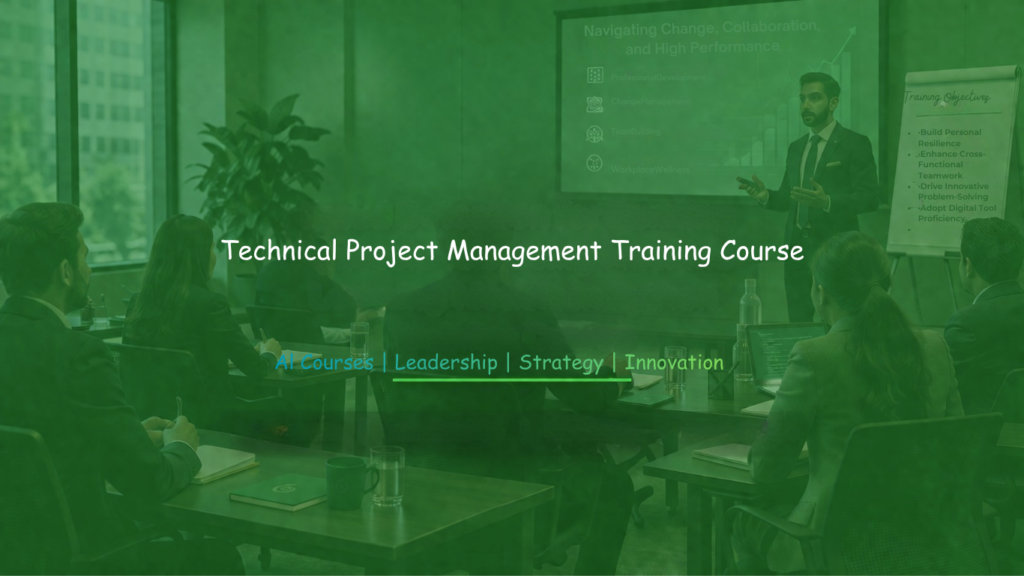
Technical Project Management is a professional course that focuses on planning, coordinating, executing, and controlling technical projects across different industries and environments. It supports professionals in managing project goals, timelines, resources, risks, and stakeholder expectations through organized methods and practical decision-making processes.
The course also connects project activities with AI tools that improve planning, communication, tracking, and performance analysis processes. AI integration supports faster decisions, better resource allocation, predictive insights, and improved project monitoring for professionals handling technical responsibilities. Participants should expect practical knowledge, improved project coordination skills, stronger delivery approaches, and useful AI-supported methods for project execution success.
Training Objectives
This course provides participants with practical approaches for managing technical projects from planning through successful completion. It also strengthens the ability to apply AI-supported methods that improve project execution, decision-making, and performance outcomes.
- Develop effective project planning and scheduling capabilities.
- Improve project scope and requirement management processes.
- Strengthen technical risk identification and mitigation practices.
- Enhance project budgeting and resource allocation skills.
- Improve stakeholder communication and reporting methods.
- Apply AI tools for project monitoring and analysis.
- Increase project delivery efficiency and performance management abilities.
Who Should Attend?
This course is ideal for professionals involved in planning, executing, managing, and supervising technical projects.
- Technical Project Managers
- Project Coordinators
- Team Leaders
- IT Managers
- Engineers
- Operations Managers
- Business Analysts
Training Summary
Technical Project Management focuses on structured planning, project execution, resource coordination, stakeholder engagement, scheduling, risk management, and performance monitoring processes. The training combines practical project management techniques with AI-supported approaches that improve project visibility and operational efficiency. Participants will gain exposure to project planning tools, communication frameworks, reporting methods, and performance measurement techniques. The course also strengthens skills related to technical documentation, project tracking, and effective decision-making processes. Key areas include project scheduling, budgeting, resource management, AI integration, risk control, and project delivery performance.
Specific Deliverables
- Project planning and scheduling templates
- Risk assessment and mitigation framework
- Stakeholder communication plan
- Project performance tracking dashboard
- AI-supported project monitoring checklist
Key Takeaways
- Ability to manage technical projects using structured methods
- Improved project planning and execution skills
- Better resource allocation and project scheduling practices
- Enhanced use of AI tools in project management activities
- Stronger decision-making and project reporting abilities
Course Outline
Day 1: Project Planning and Scope Management
- Project lifecycle and technical project structures
- Project scope definition techniques
- Requirement gathering approaches
- Work breakdown structure development
- Project scheduling methods
- Stakeholder identification processes
- AI applications in project planning
Day 2: Resource Coordination and Budget Management
- Resource planning strategies
- Team allocation methods
- Project cost estimation techniques
- Budget development processes
- Resource utilization monitoring
- Cost control approaches
- AI-supported budget analysis tools
Day 3: Risk Management and Performance Tracking
- Risk identification methods
- Risk analysis techniques
- Risk response planning
- Project issue management
- Performance measurement indicators
- Monitoring and reporting methods
- AI-driven predictive project analysis
Day 4: Communication and Stakeholder Engagement
- Project communication planning
- Stakeholder engagement strategies
- Technical reporting methods
- Team collaboration practices
- Conflict management approaches
- Project documentation processes
- AI-supported communication solutions
Day 5: Project Execution and Delivery Management
- Project execution planning
- Quality management approaches
- Change management procedures
- Project progress evaluation
- Project closure activities
- Lessons learned documentation
- AI-supported project delivery optimization
Training Methodology
The training methodology applies practical learning approaches that strengthen understanding, participation, and real-world application. Trainers will guide participants through structured activities that combine discussions, demonstrations, practical exercises, and project-based scenarios. The methodology also integrates AI-supported techniques that improve learning engagement and strengthen project management capabilities.
- Interactive Sessions: Interactive discussions will encourage active participation and improve understanding through guided engagement and knowledge sharing.
- Practical Exercises: Participants will complete practical activities that strengthen project management skills and improve application abilities.
- Case Study Analysis: Real project situations will support understanding of challenges, decision-making approaches, and implementation practices.
- Group Activities: Team-based exercises will improve collaboration, communication, and problem-solving capabilities among participants.
- AI-Supported Demonstrations: Participants will explore AI tools that improve planning, reporting, analysis, and project monitoring processes.
Certification
Vision Reach Global Consultancy will provide certificates to participants upon successful completion of the training. The certificate confirms participation and recognizes the knowledge and practical skills acquired during the course.
| Location | Duration | Fee | Language | |
|---|---|---|---|---|
| Online, Virtual | Mon - Fri (5 Days) | USD 800 | 80,000 KES | English | Book Next Session → |
| Nairobi, Kenya | Mon - Fri (5 Days) | USD 1500 |110,000 KES | English | Book Next Session → |
| Mombasa, Kenya | Mon - Fri (5 Days) | USD 1500 |115,000 KES | English | Book Next Session → |
| Kisumu, Kenya | Mon - Fri (5 Days) | USD 1500 |115,000 KES | English | Book Next Session → |
| Naivasha, Kenya | Mon - Fri (5 Days) | USD 1500 |110,000 KES | English | Book Next Session → |
| Cape Town, South Africa | Mon - Fri (5 Days) | USD 3,600 | English | Book Next Session → |
| Pretoria, South Africa | Mon - Fri (5 Days) | USD 3,200 | English | Book Next Session → |
| Johanessburg, South Africa | Mon - Fri (5 Days) | USD 3,400 | English | Book Next Session → |
| Zanzibar, Tanzania | Mon - Fri (5 Days) | USD 2,600 | English | Book Next Session → |
| Dar es Salaam, Tanzania | Mon - Fri (5 Days) | USD 2,000 | English | Book Next Session → |
| Arusha, Tanzania | Mon - Fri (5 Days) | USD 1,900 | English | Book Next Session → |
| Dodoma, Tanzania | Mon - Fri (5 Days) | USD 1,800 | English | Book Next Session → |
| Kigali, Rwanda | Mon - Fri (5 Days) | USD 1,900 | English | Book Next Session → |
| Kampala, Uganda | Mon - Fri (5 Days) | USD 1,900 | English | Book Next Session → |
| Dubai, UAE | Mon - Fri (5 Days) | USD 3,800 | English | Book Next Session → |
| Abuja, Nigeria | Mon - Fri (5 Days) | USD 2,800 | English | Book Next Session → |
| Lagos, Nigeria | Mon - Fri (5 Days) | USD 2,800 | English | Book Next Session → |
| Accra, Ghana | Mon - Fri (5 Days) | USD 5,500 | English | Book Next Session → |
| Machakos, Kenya | Mon - Fri (5 Days) | USD 1500 |115,000 KES | English | Book Next Session → |